


5 things you need to know about Tarawih prayers
This article was first published in 20 April 2020, and has since been updated as of 13 Feb 2026.
A complete guide on why, when and how to do Tarawih prayers
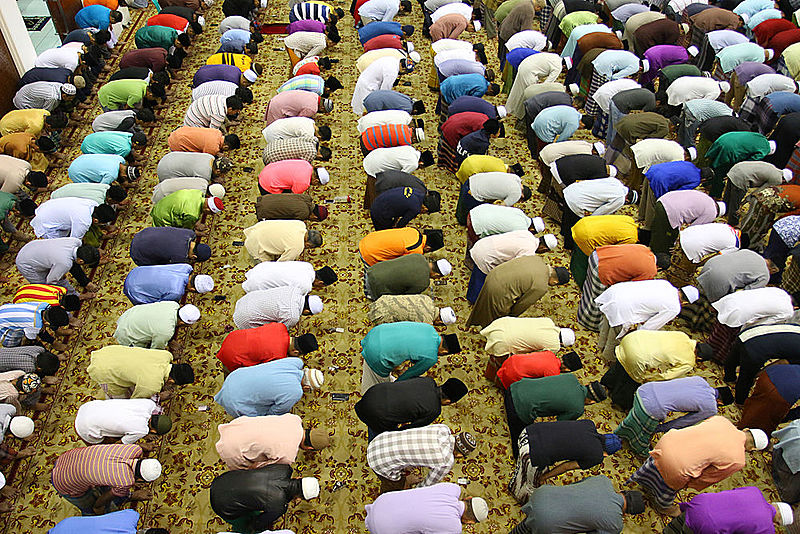
As we welcome Ramadan, let us revisit one of the highly encouraged (sunnah mu’akkadah) practices during this blessed month which many are earnestly looking forward to every year - the Tarawih prayers. The Tarawih prayers, amongst other rituals, greatly enliven the spirit of Ramadan. Such is the practice exemplified by Prophet Muhammad s.a.w. and his companions.
It is our religious commitment to ensure the right understanding of the rulings and the quality of the Tarawih prayers. Here are 5 things that you will need to know about the Tarawih prayers to help us in fulfilling our commitment:
1) Merits of observing the Tarawih prayers
Understanding the benefits of the Tarawih prayers would inspire us to observe these prayers more consistently and stay more focused. The Prophet s.a.w. said,
مَنْ قَامَ رَمَضَانَ إِيْمَانًا وَاحْتِسَابًا غُفِرَ لَهُ مَا تَقَدَّمَ مِنْ ذَنْبِهِ
“Whoever prays during the night of Ramadan with iman (faith) and in hopes of rewards (from Allah), his past sins will be forgiven for him.”
(Sahih Al-Bukhari and Muslim)
Nothing should be of greater importance for any Muslim than having his sins expiated as it contributes to acquiring eternal success and happiness in the hereafter. For this, the Prophet s.a.w. asserted that sinning is a human flaw,
“All the sons of Adam are sinners, but the best sinners are those who repent.”
(Sunan At-Tirmidhi)
Besides repentance, hasanat or good deeds will also erase sins, and the Tarawih prayers are among the most rewarding deeds a Muslim can observe. This is based on the Quranic verse,
إِنَّ الْحَسَنَاتِ يُذْهِبْنَ السَّيِّئَاتِ
“Verily the good deeds remove the misdeeds.”
(Surah Hud, 11:114)
2. How to perform the Tarawih prayers
The Tarawih prayers are a form of night prayers (qiyam al-layl) as they are offered after the Ish prayers until before Fajr Ṣādiq (or the Subuh prayer time) sets in. They are done in 2-raka‘at sets of prayers like the sunnah prayers before or after the obligatory prayers.
The Tarawih prayers can be observed either congregationally or individually, and the former is more recommended (mustahab).
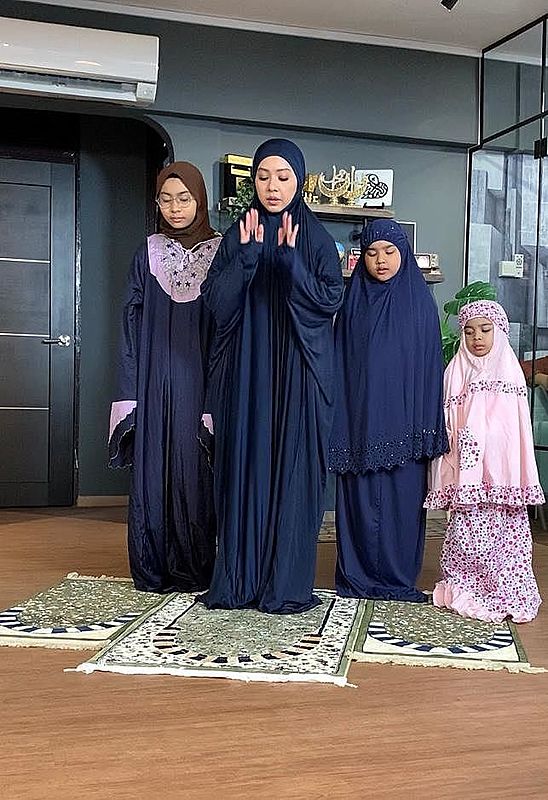
The intention must be established in your heart. For example, you may intend:
أُصَلِّي سُنَّةَ التَراوِيحِ رَكعَتَينِ أَدَاءً لِلَّهِ تَعَالَى
"I intend to pray the Sunnah prayer of Tarawih two raka'at for Allah The Exalted."
When praying in congregation, the imam may intend:
أُصَلِّي سُنَّةَ التَراوِيحِ رَكعَتَينِ إِمَامًا لِلَّهِ تَعَالَى
I intend to pray the Sunnah prayer of Tarawih as the Imam two raka'at for Allah ta'ala
And when praying in congregation, the makmum may intend:
أُصَلِّي سُنَّةَ التَراوِيحِ رَكعَتَينِ مَأمُومًا لِلَّهِ تَعَالَى
I intend to pray the Sunnah prayer of Tarawih as the Makmum (follower) two raka'at for Allah ta'ala
Here is the step-by-step guide for Terawih prayer. Other than upholding integrals (arkan) and the prerequisites (shurut) of the prayers, it is important to implement some etiquettes (adab) while praying:
Staying focused throughout Tarawih
Having the right niyyah (intention) is essential when beginning any form of worship. It should not only make a servant aware of the Creator whom he is praying for, but also assist him to acquire ihsan (excellence) in the prayer. Ihsan suggests a high degree of contemplation, letting a Muslim immerse in his prayers or any form of ibadah with great sincerity and pleasure. In a hadith narrated by Imam Muslim, the Prophet s.a.w. defined ihsan as follows:
أَنْ تَعْبُدَ اللَّهَ كَأَنَّكَ تَرَاهُ، فَإِنْ لَمْ تَكُنْ تَرَاهُ فَإِنَّهُ يَرَاكَ
“To worship Allah as if you see Him, and if you do not see Him, He sees you.”
(Sahih Muslim)
To achieve this, we should constantly remind ourselves of having the right intention. And secondly, strengthen our focus by understanding what we utter in prayer, and stay motivated by the great deal of rewards the Tarawih prayers have to offer.
Observing cleanliness for Tarawih
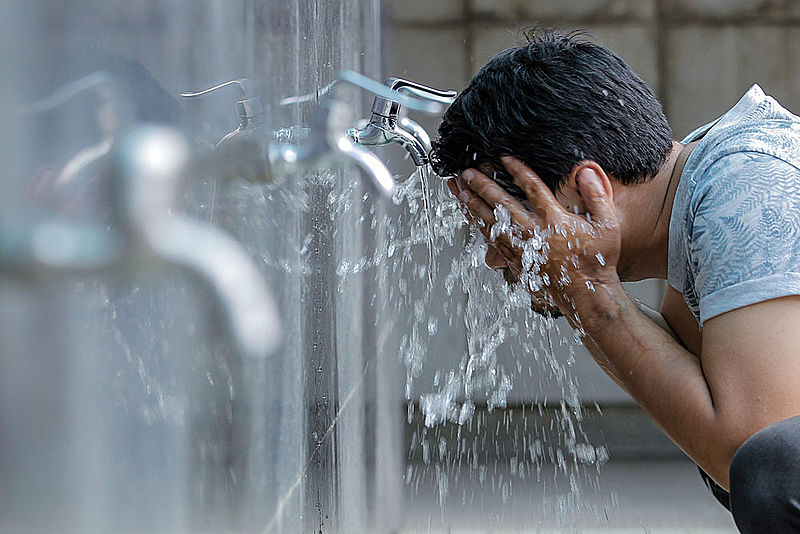
Islam promotes both physical and spiritual purification in every aspect of life. This reflects our faith to some degree as the Prophet s.a.w. said in a ḥadīth narrated by Muslim,
الطَّهُورُ شَطْرُ الْإِيمَانِ
“Purity is half of Iman (faith)”
(Sahih Muslim)
Hence, a Muslim should observe his overall cleanliness in his prayers beyond wudhū’ that is part of the prerequisites (shurut) of prayers. Allah s.w.t. says in the Quran,
إِنَّ اللَّهَ يُحِبُّ التَّوَّابِينَ وَيُحِبُّ الْمُتَطَهِّرِينَ
“Allah loves those who turn to Him constantly and He loves those who keep themselves pure and clean.”
(Surah Al-Baqarah, 2:222)
And in another Quranic verse, Allah s.w.t. says,
وَثِيَابَكَ فَطَهِّرْ
“And (O Muhammad) purify your garment.”
(Surah Al-Muddaththir, 74:4)
While observing our physical cleanliness, we should try our best to avoid an extreme precautious attitude towards it termed as waswas. Waswas leads to unnecessary habitual actions and other implications such as the inability to focus during our prayers.
We should also strive to uphold the sunnah of Prophet Muhammad s.a.w. by using water wisely. Prophet Muhammad s.a.w. was able to perform wudu (ablution) by using only one mudd (approximately half a litre) of water. Let us try to not waste even a drop of water. Read A Mazmunah Trait: Wastefulness.
Dressing well during Tarawih as a sign of gratitude
While covering the ‘awrah (selected body parts that need to be covered) is a religious requirement, being in the best outfit for our prayers is admirable.
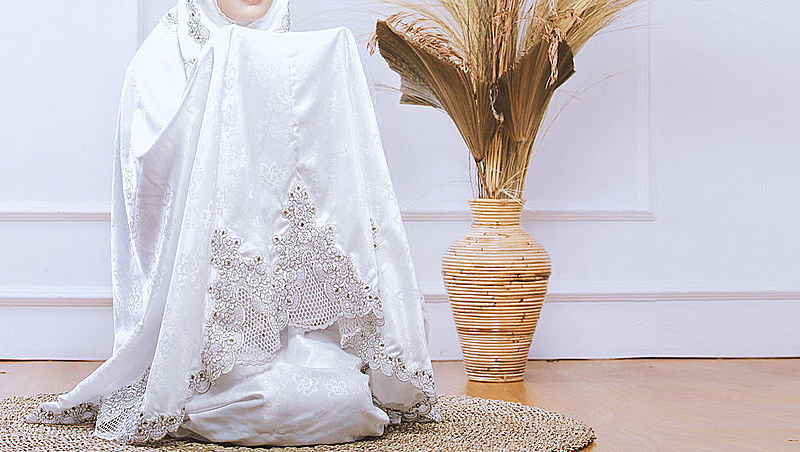
If we wear nice outfits when meeting others, let us also be outwardly presentable in our prayers to show our gratitude for the blessings we are bestowed with. In a hadith narrated by al-Tirmidhi, the Prophet s.a.w. said,
إِنَّ اللهَ يُحِبُّ أَنْ يُرَى أَثَرُ نِعْمَتِهِ عَلَى عَبْدِهِ
“Allah loves to see the sign of His bounties on His slave.”
(Sunan At-Tirmidhi)
The nice outfits we wear should mould us to be grateful and humble servants, and not motivate us to show off to others as that may bring about arrogance in us.
3) Number of raka‘at for Tarawih
The question of whether we should observe the Tarawih prayers in eight or twenty raka‘at (not inclusive of Witr prayers) has been a prolonged debate within the Muslim community. Either way has its valid bases. Therefore, no one should argue about it with the purpose of wronging others or, worse still, judging them for committing sins.
The ikhtilaf (scholarly difference) of which is better to be practised has been discussed by the past Muslim scholars. They not only understood the intellectual reasoning for the opinions they held but also implemented its etiquettes (adab) by agreeing to disagree, respecting and refraining from outraging others.
Those who agree with doing eight raka‘at follow what the Prophet s.a.w. practised in particular as described by his wife ‘Aishah r.a. in a hadith narrated by Imam Al-Bukhari:
مَا كَانَ رَسُولُ اللَّهِ صلى الله عليه وسلم يَزِيدُ فِي رَمَضَانَ وَلاَ فِي غَيْرِهِ عَلَى إِحْدَى عَشْرَةَ رَكْعَةً
“Allah’s Messenger s.a.w. never exceeded eleven raka‘āt in Ramadan or in other months.”
(Sahih Al-Bukhari)
The hadith suggests that the Prophet s.a.w. consistently prayed eleven raka‘at (inclusive of the three raka‘at of the sunnah Witr prayer) every night within and without Ramadan. Whereas the Tarawih prayer in the twenty raka‘at was first initiated by the Prophet’s companion ‘Umar ibn al-Khattab r.a. during his time as the caliphate, as reported by a number of Tabi‘in (followers of the companions).
Sa’ib ibn Yazid said: ‘Umar ibn al-Khattab r.a. gathered the people together in Ramadan to be led by Ubay ibn Ka‘b and Tamīm al-Dari r.a. in praying twenty-one raka‘at, and they used to recite hundreds of verses, and dispersed before dawn broke. The number of raka‘at in different hadith narrations varies; some state twenty raka‘at, while others twenty-one and twenty-three. The reason why sayyidina ‘Umar r.a. increased the number of raka‘at is mainly to gather the Muslims then so that they optimised their time and effort during Ramadan with much ‘ibadah.
Having mentioned the reasoning of both views, we may conclude that whoever chooses to pray eight raka‘at, he may do so, and whoever wants to pray twenty, or even more, he may do so too. Most importantly, we should put our utmost effort to perform as much ‘ibadah as possible, raising both its quality and quantity, during the month of Ramadan. It is also important that we equip ourselves with the best of akhlaq in our relationship with others.
4) Witr Prayers
Witr prayers are another form of the night prayers (qiyam al-layl). As Witr suggests odd numbers, these prayers are observed in odd-numbered raka‘at (one, three, five and so on).
The Witr prayers are strongly encouraged by the Prophet s.a.w. Some Hanafis regard these prayers as obligatory but the majority of the scholars consider them as Sunnah Muakkadah (highly encouraged). In a hadith narrated by Imam Muslim, the Prophet s.a.w. said,
مَنْ خَافَ أَنْ لَا يَقُومَ مِنْ آخِرِ اللَّيْلِ فَلْيُوتِرْ أَوَّلَهُ ، وَمَنْ طَمِعَ أَنْ يَقُومَ آخِرَهُ فَلْيُوتِرْ آخِرَ اللَّيْلِ ، فَإِنَّ صَلَاةَ آخِرِ اللَّيْلِ مَشْهُودَةٌ ، وَذَلِكَ أَفْضَلُ
“He who apprehends that he may not get up in the later part of the night, should observe the Witr prayer in the first part of it; and he who is certain to get up in the last part of it, he should observe Witr at the end of the night, because the prayer at the end of the night is attended (by the angels), and that is better.”
(Sahih Muslim)
The Witr prayers are usually offered as the last set of prayers in a night like after the Tarawih prayers. The Prophet s.a.w. said,
“Make Witr prayer the last of your prayers at night.”
(Sahih Al-Bukhari and Muslim)
In this regard, a question arises asking if we can still perform any prayers after we are done with the Witr prayers. This is a valid concern because in a typical situation i.e. after praying Tarawih and Witr in a mosque, there will still be plenty of time if one intends to perform more prayers at home before Subuh.
This particular question can be addressed with the following:
-
The Witr prayers are best done as the last set of prayers in a night. This is based on a hadith narrated by Imam Muslim mentioned earlier in which the Prophet s.a.w. advised that we shall observe the Witr prayers in the last part of the night. When we perform Witr prayer in the last part of the night, that would mean that it is the last set of prayers in the night. That is the best we can opt for. And if we fear not being able to do such, we shall then pray in the first part of the night.
-
The Prophet s.a.w. prayed after having performed Witr prayers, only with even-numbered raka‘āt, unlike Witr. The wife of the Prophet s.a.w, ‘Aishah r.a. said,
كَانَ النَّبِيِّ صَلَّى اللهُ عَلَيْهِ وَسَلَّمَ يُصَلِّيْ رَكْعَتَيْنِ بَعْدَ الْوِتْرِ وَهُوَ جَالِسٌ
“The Prophet s.a.w used to pray two raka‘at after Witr in a sitting position.”
(Musnad Ahmad)
-
What is not allowed is to offer another set of Witr prayers in one night. The Prophet s.a.w. said, “There are no two times of Witr in one night.” (Sunan An-Nasa'i)
Based on this, there is no harm in observing more prayers after completing the Witr prayers on the same night. In fact, it is a commendable effort to keep uplifting our spirituality with much ‘ibadah throughout nights of Ramadan.
5) Praying Tarawih at home
As much as we long for Tarawih prayers in the mosque alongside our Muslim brothers or sisters, that may not be possible temporarily. It is because the necessity to take safety measures due to the current coronavirus outbreak outweighs our longing for the congregational prayers at mosques or public spaces.
The Tarawih prayers can still be observed in congregation at home.
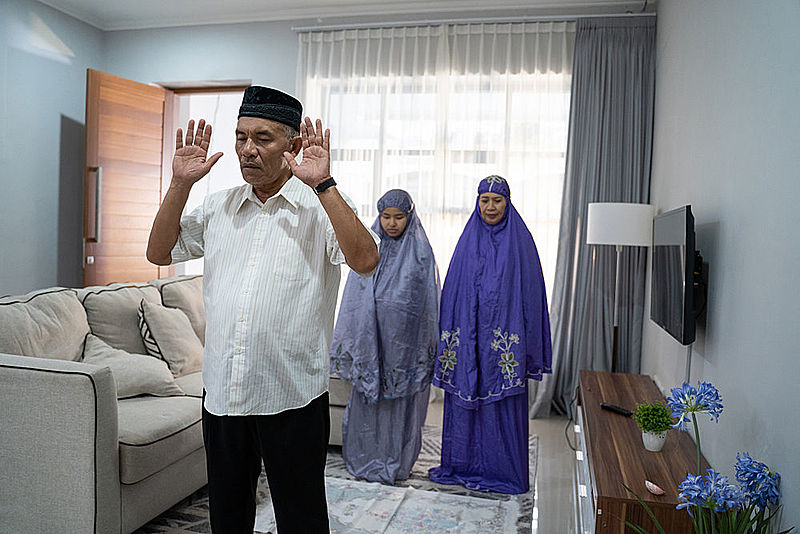
Should anyone have doubts about their limited knowledge of Quranic Surahs, particularly those performing Tarawih prayers individually or leading as Imam, it is permissible to recite any Surah within one's capacity, such as Surah Al-Ikhlas, even if repeated. One may also consider holding a small pocket Quran during prayer, taking care not to make more than three major movements unrelated to the prayer itself.
On a different note, this Ramadan could be an opportunity for us to learn other Surah and increase our appreciation and repertoire of reciting the beautiful Quranic verses.
In general, any prayer when done at home will lead to Allah’s blessings, especially for the one who performs it and bring goodness to the entire household. The Prophet s.a.w. said,
إِذَا قَضَى أَحَدُكُم الصَّلاَةَ فِي مَسْجِدِهِ، فَلْيَجْعَلْ لِبَيْتِهِ نَصِيْبًا مِنْ صَلاَتِهِ، فَإِنَّ اللهَ جَاعِلُ فِي بَيْتِهِ مِنْ صَلاَتِهِ خَيْرًا
“If one of you offers his prayers in the mosque then he should make a portion of his prayers in his house, as Allah s.w.t. has made his prayers in his house a means of goodness.”
(Sahih Muslim)
In fact, there is no need for online congregation such that we desire to pray with other congregants virtually, in order to establish the same spirit in mosques. The general ruling within religious scholars does not recognise virtual congregational prayers.
Besides the spiritual benefit that we may acquire from praying at home, let us take the opportunity to also foster our relationship better with our family members as a social gain.
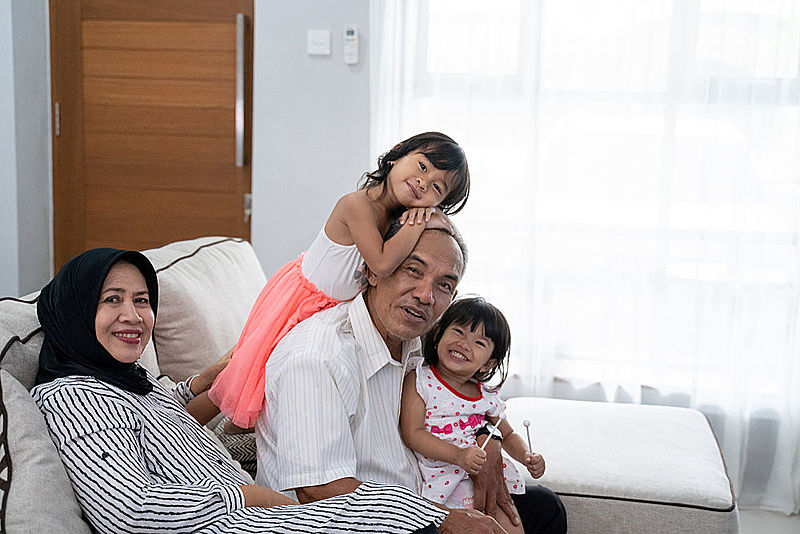
This will help us keep motivated despite our sadness, sorrow and other sorts of emotional pain for not being able to go to the mosque.
Some of us may not feel confident enough to pray or lead Tarawih at home. However, please be assured that you can perform this prayer with your family members or your housemates at the comfort of your home. If you are unsure, you may reach out to our local Asatizah and ask any questions you have. You can also check out this Tarawih guide featuring Ustaz Irwan Hadi and local celebrity Marina Yusoff and her family:
Lastly, let us strive to get the best out of upcoming Ramadan within the limitations we have and remain positive towards our Creator for the predestined challenges we are facing.
For more Ramadan content, click here.
Articles on Muslim.Sg may be reproduced electronically or in print with prior permission from Muslim.Sg. Proper credit must be given to the author(s) and Muslim.Sg.