


Prophet Muhammad's kindness and love for children
In brief:
- Prophet Muhammad s.a.w. showed children love, patience, dignity and respect.
- He treated children fairly and trusted young people with meaningful responsibilities.
- Caring for children is a shared responsibility that includes nurturing their well-being and creating safe environments where they feel protected and heard.
This article was first published on 20 October 2021 and has since been updated as of October 2026.

Children are priceless treasures from Allah. As Muslims, we consider human life sacred and recognise every child as a unique individual worthy of respect and dignity. Children deserve to be loved, nurtured and given the care and support they need to grow and thrive in a healthy and safe environment.
It is the responsibility of every Muslim parent to nurture in their children a deep love, respect and appreciation for Allah, His Messenger s.a.w. and the teachings of Islam.
We must therefore give utmost importance to the upbringing of our children, drawing lessons from our beloved Prophet s.a.w, whose words and actions provide timeless guidance and inspiration on how we should care for and nurture them.
The Prophet s.a.w. said,
إِنَّ مِنْ أَكْمَلِ الْمُؤْمِنِينَ إِيمَانًا أَحْسَنُهُمْ خُلُقًا وَأَلْطَفُهُمْ بِأَهْلِهِ
“Indeed among the believers with the most complete faith is the one who is the best in conduct and the most kind to his family.”
(Sunan At-Tirmidhi)
In Islam, just as our parents have rights upon us, our children also have rights upon us. Caring for our children means not only nurturing their physical, emotional and spiritual well-being, but also ensuring that they feel safe and protected.
As parents, educators and members of the community, we share a responsibility to create safe environments where children are treated with care, dignity and respect, and where they feel safe to speak up when something does not feel right.
Here are five lessons we can learn from the example of Prophet Muhammad s.a.w. on caring for and nurturing children:
1. Prophet Muhammad’s love and attention towards children
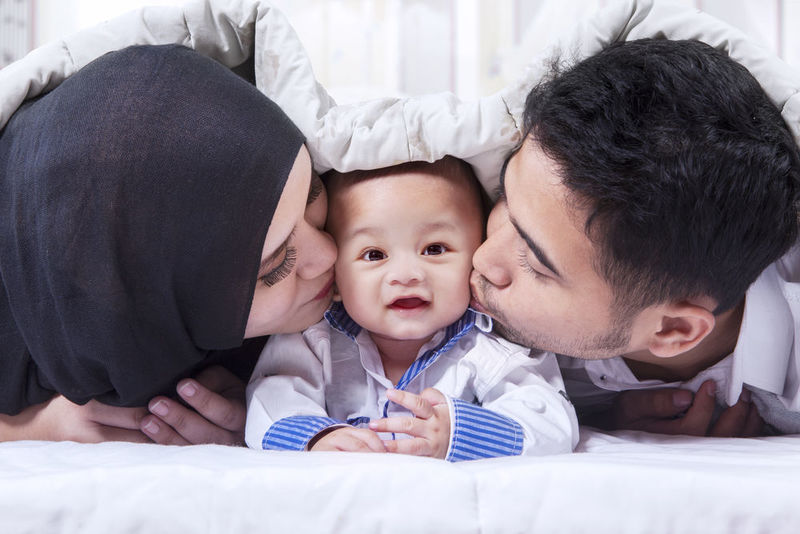
Prophet Muhammad s.a.w. showed great love and mercy towards children, not only towards his own family but also towards other children around him. Abu Huraira r.a. reported that al-Aqra' bin Habis saw the Prophet s.a.w. kissing Al-Hassan, his grandson. Al-Aqra' said: “I have ten children, but I have never kissed any of them”. The Messenger s.a.w. replied:
إِنَّهُ مَنْ لاَ يَرْحَمْ لاَ يُرْحَمْ
He who does not show mercy (towards his children), no mercy would be shown to him.”
(Sahih Muslim)
The Prophet s.a.w. also showed care for children by paying attention to what mattered to them. When a young boy named Abu Umair was grieving over the death of his pet bird, the Prophet s.a.w. noticed his sadness and spoke to him with care.
عَنْ أَنَسِ بْنِ مَالِكٍ، قَالَ كَانَ رَسُولُ اللَّهِ صلى الله عليه وسلم يَدْخُلُ عَلَيْنَا وَلِي أَخٌ صَغِيرٌ يُكْنَى أَبَا عُمَيْرٍ وَكَانَ لَهُ نُغَرٌ يَلْعَبُ بِهِ فَمَاتَ فَدَخَلَ عَلَيْهِ النَّبِيُّ صلى الله عليه وسلم ذَاتَ يَوْمٍ فَرَآهُ حَزِينًا فَقَالَ مَا شَأْنُهُ. قَالُوا مَاتَ نُغَرُهُ فَقَالَ يَا أَبَا عُمَيْرٍ مَا فَعَلَ النُّغَيْرُ
Anas bin Malik r.a said: "The Messenger of Allah s.a.w used to come to visit us. I had a younger brother who was called Abu ‘Umair by nickname (kunyah). He had a sparrow which he played with, but it died. So one day the Prophet s.a.w came to see him and saw him grieving. He asked: 'What is the matter with him?' The people replied: 'His sparrow has died.' He (the Prophet s.a.w) then said: 'Oh Abu ‘Umair! What has happened to the little sparrow?'"
(Sunan Abi Dawud)
In this hadith, the Prophet s.a.w. acknowledged Abu Umair’s sadness over something that an adult might have considered a small matter. His example reminds us of the importance of paying attention to our children’s feelings and taking seriously the things that matter to them. This can help build trust, open communication, and validation for the child.
Today, parents may find it challenging to spend enough time with their children amid their daily responsibilities. Making time to play, listen and have meaningful conversations can provide children with comfort and a sense of security, while supporting their emotional well-being.
2. Prophet Muhammad’s patience with children

Anas ibn Malik r.a. was a young boy when he had the honour of serving the Prophet s.a.w. During his ten years of service, the Prophet s.a.w. never said a word of impatience or rebuked him. Anas r.a. himself narrated:
خَدَمْتُ النَّبِيَّ صلى الله عليه وسلم عَشْرَ سِنِينَ، فَمَا قَالَ لِي أُفٍّ. وَلاَ لِمَ صَنَعْتَ وَلاَ أَلاَّ صَنَعْتَ
“I served the Prophet s.a.w. for ten years, and he never said to me, ‘Uff’ (a minor harsh word denoting impatience) and never blamed me by saying, "Why did you do so or why didn't you do so?”
(Sahih Al-Bukhari)
Children are bound to make mistakes as they grow and learn. As parents, we should respond with patience, while continuing to advise and guide them with care. Rather than being quick to scold them, we should also make dua for their well-being and guidance. The Prophet s.a.w. taught that a parent’s supplication for their child is among the supplications that are answered by Allah s.w.t.
Read: 9 duas for your children’s protection, health, guidance and success
3. Prophet Muhammad’s trust in youth

Prophet Muhammad s.a.w. showed trust in young people by giving them opportunities to take on meaningful responsibilities. Despite Usama ibn Zaid’s r.a. young age, the Prophet s.a.w. entrusted him with the leadership of an army.
When some people criticised Usama’s leadership, the Prophet s.a.w. defended his appointment, saying:
إِنْ تَطْعُنُوا فِي إِمَارَتِهِ فَقَدْ كُنْتُمْ تَطْعُنُونَ فِي إِمَارَةِ أَبِيهِ مِنْ قَبْلُ، وَايْمُ اللَّهِ، إِنْ كَانَ لَخَلِيقًا لِلإِمَارَةِ، وَإِنْ كَانَ لَمِنْ أَحَبِّ النَّاسِ إِلَىَّ، وَإِنَّ هَذَا لَمِنْ أَحَبِّ النَّاسِ إِلَىَّ بَعْدَهُ
"If you are criticising Usama's leadership, you have then criticised his father's leadership from before. By Allah, He was worthy of leadership and he was one of the dearest persons to me, and (now) he (Usama) is one of the dearests to me after him (Zaid)'."
(Sahih Al-Bukhari)
Likewise, parents can show their trust in their children by giving them age-appropriate responsibilities and involving them in family discussions and decisions. Listening to their views and giving them opportunities to contribute can help children feel valued and develop a sense of responsibility.
Read: 5 significant reflections to make the best of our youth
4. Prophet Muhammad’s immense respect for his daughter Fatimah
Whenever the Prophet s.a.w. was visited by his youngest daughter, Fatimah r.a, he would stand to welcome her when she entered the room, take her by the hand, kiss her and make her sit where he was sitting. Likewise, she would do the same when he visited her. These beautiful acts, though simple, show the profound love and respect they held for each other. Aishah r.a, the Mother of the Believers said,
ما رأيتُ أحدًا كانَ أشبَه سمتًا وَهديًا ودلًّا برسولِ اللَّهِ صلَّى اللَّهُ عليهِ وسلَّمَ من فاطمةَ كانت إذا دخلت عليهِ قامَ إليها فأخذَ بيدِها وقبَّلَها وأجلسَها في مجلسِه وَكانَ إذا دخلَ عليها قامت فأخذت بيدِه فقبَّلتهُ وأجلستهُ في مجلسِها
"I have not seen anyone who resembled the Prophet s.a.w in terms of conduct, way, and manners, more than Fatimah". (Aishah continued,) "When the Prophet saw her coming, he would stand up for her, took her hand, kissed her, and brought her to sit in his place. When the Prophet s.a.w visited her, she would stand up for him, take his hand, kiss him and brought him to sit in her place.”
(Sunan At-Tirmidhi)
The Prophet’s s.a.w. example reminds us that children, too, should be treated with dignity and respect. As parents, this includes respecting their privacy and being mindful not to embarrass or humiliate them in front of others.
Read: 3 special qualities of Fatimah Az-Zahra r.a.
5. Prophet Muhammad’s emphasis on treating children equally

Parents may sometimes, knowingly or unknowingly, favour one child over another. The Prophet s.a.w. emphasised fairness in the treatment of one’s children.
أنَّ أباهُ أتى بِهِ النَّبيَّ صلَّى اللَّهُ علَيهِ وسلَّمَ يشهَدُ علَى نحلٍ نحلَهُ إيَّاهُ فقالَ : أَكُلَّ ولدِكَ نحَلتَ مثلَ ما نحلتَهُ قالَ : لا قالَ : فلا أشهَدُ على شَيءٍ أليسَ يَسرُّكَ أن يَكونوا إليكَ في البِرِّ سَواءً قالَ : بلَى قالَ : فلا إذًا
It was narrated from An-Nu'man that his father brought him to the Prophet to bear witness to a present that he gave to him. He said: "Have you given all your children a present like that which you have given to him?" He said: "No." He said: "I will not bear witness to anything. Will it not please you if they were all to treat you with equal respect?" He said: "Of course." He said: "Then no (I will not do it)."
(Sunan An-Nasa’i)
Favouring one child over another, whether through praise, comparison or gifts, should be avoided, as it may affect a child’s sense of self-worth.
Indeed, Prophet Muhammad s.a.w. has shown us through his example how children should be treated with love, care, patience and respect. His example reminds us that caring for children is not only about nurturing and guiding them, but also about ensuring that they feel safe, valued and protected.
As parents and members of the community, it is our responsibility to learn from these teachings and put them into practice in our daily lives. May Allah s.w.t. guide us in raising children who are devoted to Him, who grow with good character and who, in turn, become a source of goodness for their families and communities.
And Allah knows best.
Articles on MuslimSG may be reproduced electronically or in print with prior permission from MuslimSG. Proper credit must be given to the author(s) and MuslimSG.