


Majlis Ugama Islam Singapura
Friday Sermon
24 July 2026 / 9 Safar 1448H
Preserving the Integrity of Our Religious Lives
Dear blessed Friday congregation,
Let us embody taqwa towards Allah s.w.t. with full awareness and consciousness. Let us carry out all His commands and abstain from all His prohibitions. May Allah grant us guidance and wisdom to remain on the straight path. Amin, ya Rabbal 'Alamin.
My dear brothers,
Islam places immense weight on preserving the integrity of religious life. This refers to an attitude of caution and wisdom in dealing with religious knowledge. Through religious knowledge, we come to understand Allah's commands, prohibitions, and guidance, which in turn shapes the identity of our religious life.
It must be understood that any knowledge which we are uncertain of its authenticity, and is spread in the name of religion, is extremely dangerous. For example, interpreting verses of the Quran freely without considering their context, or practising a deed or placing belief in something based on fabricated hadith; all of these can shape beliefs that later become practices. Eventually, these practices may become a reference for those around us, when in truth, they are not accepted in Islam.
Recognising that this danger is increasingly spreading in our lives, whether in the real world or online, abroad or locally, this sermon wishes to share three guidelines to help us preserve the integrity of our religious life:
Firstly: Being careful in choosing sources of religious knowledge
Brothers, when we seek medical advice, we go to doctors, and when we seek legal advice, we go to lawyers. In meeting any doctor or lawyer, we aspire to find the best one. The same approach must be taken when it comes to religious advice; a matter that determines our standing before Allah, both in this world and the hereafter.
Imam Ibn Sirin said: “Indeed, this knowledge is religion itself, so look carefully at from whom you take your religion”
This is a reminder for us to scrutinise the sources of religious knowledge we receive. This means our understanding of Islam must be shaped by teachers who are properly qualified, possess good credibility, display humility, and whose actions align with their teachings and calling.
Secondly: Verify the content of religious knowledge
Brothers, as a precautionary step, even though we are careful in choosing our sources, there is much benefit in verifying the authenticity of the knowledge we receive. Allah s.w.t. says in Surah Al-Isra, verse 36:
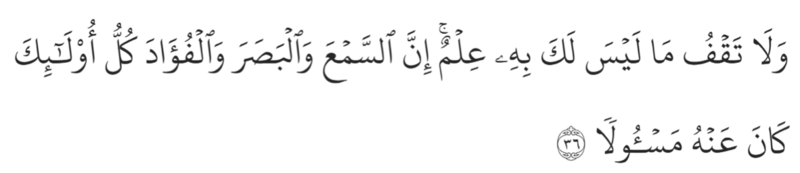
Which means: “And do not follow that of which you have no knowledge. Indeed, the hearing, the sight, and the heart – all those will be questioned (and held accountable on the Day of Judgment).”
Dear brothers, verifying the content of religious knowledge involves several layers. We need to verify whether a piece of knowledge or religious content has a strong basis. Therefore, ensure that the religious basis and evidence is authentic, because every piece of religious knowledge must be grounded in religious evidence. We also need to verify whether that basis is understood according to its true intended meaning.
Thirdly: Understand that the application of fiqh may change according to context
Brothers, there is a Malay proverb that says, “lain padang, lain belalang” – meaning different places have different circumstances. The same applies to rulings in fiqh. It is true that many foundational or core (usul) matters in fiqh do not change, such as the five daily prayers. However, there are also branch or secondary (furu’) rulings that change according to context.
For example, the minimum amount of dowry or mahr mithl differs from one country to another. It would be inappropriate for the people of one country to adopt the dowry rate of a neighbouring country and apply it in their own, because of differences in economic realities, customs, and practices between the two countries.
With this, it becomes clear that fiqh rulings on branch matters of religion can be influenced by context; whether of place, time, or local community customs. This is among the reasons we see a diversity of fatwas and fiqh views on branch matters among scholars from different countries, even though they refer to the same sources, namely the Quran and Sunnah.
Beloved congregation,
Let us together preserve the integrity of our religious life by relying on authentic sources, for indeed the integrity of our religious life today will determine our standing before Allah s.w.t. tomorrow.
Every piece of knowledge we receive, and every practice on which that knowledge is built upon, will become provisions for us when we stand before Allah in the field of Mahsyar. Therefore, let us ensure that the knowledge we learn and the practices we carry out remain true and authentic, to the very best of our ability.
Ya Allah, show us the path of truth, grant us the ability to follow it, and protect us from ignorance and heedlessness. Amin, ya Rabbal 'Alamin.

Second Sermon