


Majlis Ugama Islam Singapura
Friday Sermon
15 May 2026 / 27 Zulkaedah 1447H
A Sound Mind, A Meaningful Life

Zumratal mukminin rahimakumullah,
Let us strengthen our taqwa towards Allah s.w.t. by fulfilling all His commands and staying away from all His prohibitions. May we be among those who attain happiness and success in this world and in the Hereafter. Amin, ya Rabbal ‘Alamin.
Dear blessed congregation,
Among the greatest blessings that Allah s.w.t. has granted mankind is the gift of ‘aql – the intellect or a sound mind.
Through it, we are able to think, make judgements, and identify right from wrong. Is it not the ‘aql or intellect that distinguishes human beings from the other creations of Allah?
Allah s.w.t. says in Surah al-Anfal, verse 22:

Which means: “Indeed, the worst creatures in the sight of Allah are those who neither hear nor speak (the truth), and those who do not use their intellect to understand (the truth).”
The scholars have also emphasised the central role of the intellect in human life. In his work Maqasid al-Syariah al-Islamiyyah, Al-Imam Ibn ‘Ashur quoted the words of the wise:

Which means: “A human being is defined by his intellect, while his limbs are merely at its service.”
This means that the intellect plays a primary role of making judgments in a person’s life, while the rest of the body acts only according to what the intellect decides.
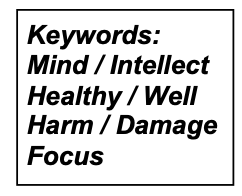
The well-being of a person’s life is closely tied to the well-being of the mind. When the intellect is properly nurtured and protected, life becomes more guided, and meaningful.
For this reason, Islam places great importance on preserving the intellect and cultivating the ability to think and evaluate based on religious guidance. The Syariah does not merely nurture our relationship with Allah, but also guides us in building a meaningful life through sound thinking and wise judgment.
My dear brothers,
Today, the challenge to preserve the well-being of the mind comes in many forms. For example, the harms caused by drug abuse, vaping, and consuming alcohol are well-known and clear.
They impair a person’s intellect and judgment, and can damage the future of individuals, families, and society as a whole.
There are more subtle harms that quietly enter our daily lives until they begin to seem normal. One example is the excessive use of smartphones, devoid from the guidance of faith. This may gradually make a person comfortable with sinful or inappropriate content, causing one to become less sensitive towards sin, and eventually regard it as something normal in life. When left unchecked, such habits can also undermine the well-being of the mind by affecting one’s focus, emotional well-being, and overall balance in life.
What may begin as a form of entertainment or a temporary escapism can gradually become a source of addiction. If left unmanaged, it may disrupt our concentration, strain family relationships, and distract us from fulfilling our responsibilities to Allah and to the people around us.
My dear brothers,
Islam places great emphasis on preserving the intellect. It firmly prohibits anything that impairs our ability to think, weakens sound judgment, and harms our well-being.
The Prophet s.a.w. said that which means: “There should neither be harm nor reciprocation of harm.” (Narrated by Ad-Daraqutni)
This hadith demonstrates that Islam rejects all forms of harm to oneself and society, including anything that damages the intellect and one’s ability to think clearly.
To preserve the intellect, in line with the higher objectives of the Syariah (maqasid al-syariah), there are several important steps we should take:
First: Avoid substances and habits that harm the mind
Dear brothers, when Islam prohibited alcoholic beverages, the ruling also encompassed everything that causes intoxication and impairs sound judgment, thus harming the human intellect.
The Prophet s.a.w. said that which means: “Every intoxicant is prohibited.” (Narrated by Muslim)
Therefore, this prohibition is not limited to alcoholic beverages alone, but includes anything that impairs the mind’s ability to think clearly and make sound judgments. This includes harmful addictions that weaken mental well-being, such as drugs, as well as habits which undermine focus and clarity in daily life, such as uncontrolled usage of our smartphones.
Second: Strengthen the mind through knowledge, values, and healthy practices
A healthy mind must not only be protected from harm, but also strengthened through knowledge and sound thinking. In today’s world, we are constantly exposed to information overload from all directions. We therefore need the ability to evaluate wisely and identify reliable sources of knowledge.
To preserve the well-being of the mind, let us cultivate healthy habits such as reading, seeking and studying knowledge, and training our focus through beneficial activities. Let us also use technology wisely so that it becomes a tool that enriches our lives, instead of weakening our sound thinking and inner peace.
Dear blessed congregation,
Indeed, preserving the intellect is not merely about avoiding harm, but also about building a life filled with knowledge, wisdom, and tranquillity. A sound mind nurtures individuals who are able to make wise decisions, contribute positively to society, and draw closer to Allah s.w.t. more meaningfully.
May Allah s.w.t. grant us the strength and guidance to preserve the blessing of intellect that He has entrusted to us, so that we may build a more meaningful life for ourselves, our families, and our society. Amin, ya Rabbal ‘Alamin.

Second Sermon